Topic 5 – Free Inquiry Blog Post
I read the first two chapters of Ulysses this week. The difficulty of Joyce’s prose wasn’t as bad as I had expected.
Chapter One, or “Telemachus,” is set in Martello Tower, where Joyce actually lived, on the morning of June 16, 1904. It introduces Stephen Dedalus, a brooding and intellectually proud young man, who feels himself an outsider in his own country. He resides with the medical student Buck Mulligan, whose boisterous and mocking irreverence grates against Stephen’s more sensitive and wounded temperament. The tension between them deepens over Stephen’s guilt and grief for his recently deceased mother, and is further complicated by the presence of the English visitor Haines, whose folkloric interest in Ireland highlights themes of colonial exploitation. The theme of Usurpation comes up a lot in this chapter, establishing Stephen’s profound sense of spiritual and artistic exile, his resentment towards Mulligan’s usurpation (“usurper”), and his resolve to leave the tower.
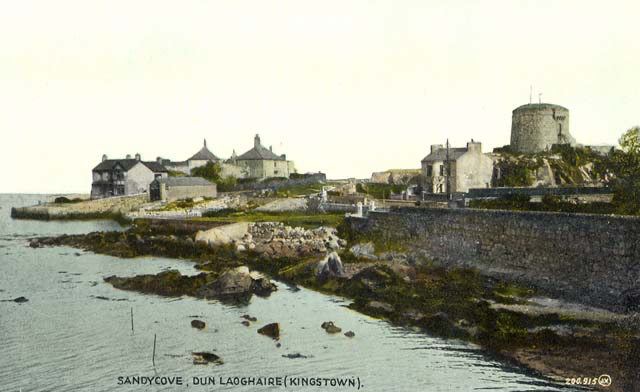
Courtesy of Ken Finlay“
https://www.askaboutireland.ie/reading-room/environment-geography/physical-landscape/man-and-the-landscape-in/martello-towers/james-joyce-tower/
I noticed parallel’s to Shakespeare’s Hamlet, another young, usurped, intellectual, as well as a not-so-subtle nod to The Tempest, as the Irish language is discussed.
Chapter Two, “Nestor,” finds Stephen Dedalus later that morning teaching a history class at Mr. Deasy’s private boys’ school. Here, his disengaged pedagogy involves a tedious lesson on Pyrrhus’s victory (another reference to Hamlet) and a riddling Sphinx puzzle.

After collecting his wages, Stephen endures a protracted interview with the school’s headmaster, the anti-Semitic and unionist Mr. Deasy, who delivers pompous pronouncements on thrift, cattle disease, and his belief that Ireland’s historical woes are the fault of “the jews,” all while entrusting Stephen with a letter on foot-and-mouth disease for the newspaper. Stephen is presented as a reluctant teacher and a haunted heir to history’s burdens, ending with Deasy’s reductive maxim, “I paid my way,” and the image of his coins jingling. Stephen refers to history as “a nightmare from which I am trying to awake.”
I also discovered a very useful online resource: https://www.joyceproject.com/. The website has turned Ulysses into a Hypertext. However, I think this resource is best used sparingly on a first read, as it would be easy to get bogged down for hours on the site–ask me how I know.